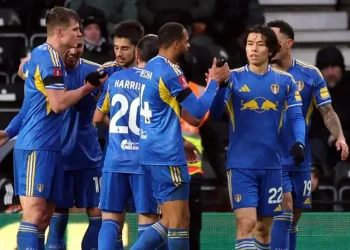
Danny Röhl could be on the brink of a bold tactical shake-up at Rangers—one that may see Youssef Chermiti dropped in favor of a more dynamic attacking approach.
With inconsistency continuing to plague Chermiti’s performances in front of goal, Röhl is now exploring an alternative system that prioritizes speed, fluidity, and unpredictability in the final third. At the heart of this potential transformation is Djeidi Gassama, an explosive winger who could be redeployed in a brand-new central role.
Traditionally operating out wide, Gassama has built a reputation for his blistering pace and fearless dribbling. However, Röhl appears ready to unleash those qualities through the middle—an unconventional move that could redefine Rangers’ attacking identity.
The reasoning is clear. Rather than relying on a conventional target man, Röhl is leaning toward a fluid forward line, where attackers rotate positions, press aggressively, and stretch opposition defenses. In this system, Gassama’s directness could prove devastating, offering a sharper edge than the more static presence of Chermiti.
Chermiti, while still a promising talent, has struggled to deliver consistently, and his role as the focal point of the attack has come under increasing scrutiny. Röhl’s willingness to rethink that structure signals a manager unafraid to make big calls in pursuit of success.
This potential shift also reflects a broader evolution in modern football—where mobility and versatility often outweigh physical presence. By repositioning Gassama centrally, Rangers could unlock new attacking patterns, create more space for midfield runners, and become far less predictable in the final third.
The coming matches may now serve as a proving ground for Röhl’s tactical gamble. If it pays off, it could mark a turning point in Rangers’ season—and a defining moment in Chermiti’s fight to reclaim his place.
Röhl’s Tactical Gamble: Electric Rangers Star Set for Shock New Role as Chermiti Faces Axe



Leave a Reply
- Trending
- Comments
- Latest